
Su-57 Jet’s Internal Missile Bay: A Game-Changer for Stealth Aircraft?
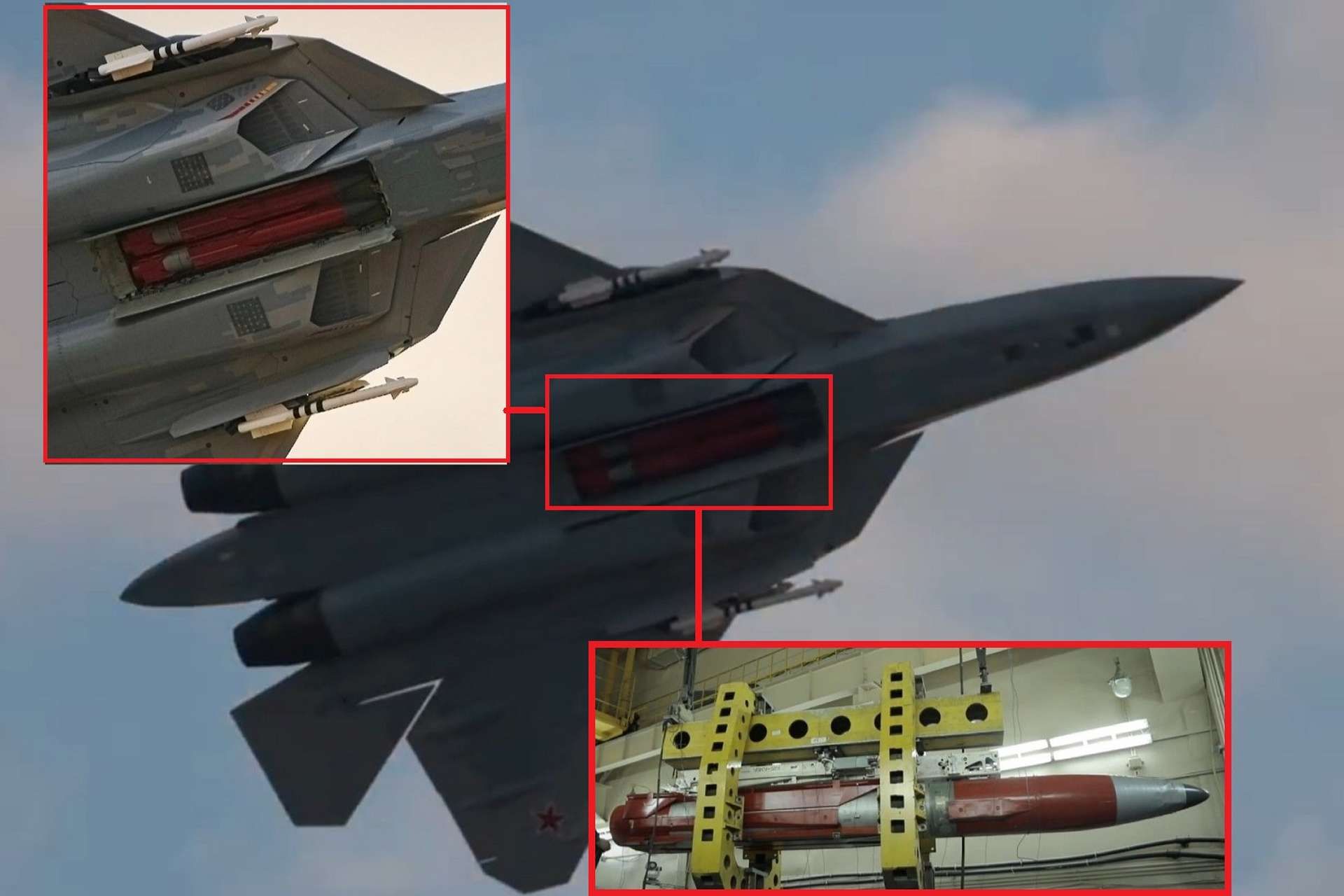
The recent demonstration of the Su-57 jet showcasing its internal missile bay loaded with two Kh‑58 anti‑radiation missiles is raising eyebrows across the global defense community. This new footage, released on November 9, 2025, just days ahead of the highly anticipated Dubai Airshow, offers a clear signal of the fighter’s evolving role in both suppression-of-enemy-air-defenses (SEAD) and self-protection. In this opinion editorial, we’ll take a closer look at the new display, break down its key features, and discuss what it might mean for the future dynamics of military export conversations.
Over the last several years, the Su-57 has been cloaked in mystery, with only fragmented views available to the public. Now, with the forward internal bay unveiled along with externally mounted short-range missiles, the Su-57 sends a bold message: the platform is not just a low-observable stealth fighter but is evolving into a dual-role aircraft capable of meeting modern, layered air defense challenges.
Unpacking the Internal Missile Bay Display
The footage in question shows the test airframe T-50-9 “509” executing dynamic passes with its bay doors outward, offering a glimpse into what lies inside. For years, the internal loading of heavy weapons was part of the whispered speculations among defense analysts. However, seeing two Kh‑58UShK missiles housed within the jet’s deep bay confirms that the Su-57’s design can indeed accommodate heavy anti-radiation ordinance without compromising the aircraft’s stealth profile.
This display is more significant than its overt aerobatic moves. It introduces several crucial talking points:
- Internal Armament Capability: The Su-57’s forward bay has been specifically engineered to host heavy weapons such as the Kh‑58 models, creating a unique payload combination for internal carriage.
- Stealth and Versatility: The choice to reveal this internal loadout along with an external carriage of R‑74/R‑74M2 short-range air-to-air missiles underscores the jet’s balanced approach—capable of handling both SEAD operations and in-flight defensive maneuvers.
- Operational Flexibility: This setup hints at an aircraft capable of quickly transitioning between roles, be it breaking through dense, modern surface-to-air missile (SAM) networks or engaging adversaries in close-range combat scenarios.
For defense observers, the strategic timing before the Dubai Airshow cannot be ignored. The video serves as a well-timed reminder of the Su-57’s capabilities and keeps export buzz alive, especially amid ongoing discourse regarding export prospects to countries like Iran, Algeria, and Ethiopia.
Modern SEAD Tactics and the Su-57
SEAD missions have long been one of the trickiest parts of air warfare, involving a delicate balance between stealth, precision, and firepower. Traditionally, suppression-of-enemy-air-defenses has been a nerve-racking aspect for any force facing modernized SAM environments. By integrating a heavy anti‑radiation missile that is carried internally, the Su-57 demonstrates its potential to effectively engage radar-guided SAM sites while maintaining its low-observable shape.
This refined approach addresses several challenging bits in modern conflict scenarios:
- Protection Against Advanced SAMs: In today’s air combat environment, SAM systems have become increasingly sophisticated. The ability to carry internal payloads that actively counter these defenses is super important for any modern fighter.
- Balanced Mission Profile: The addition of externally mounted short-range air-to-air missiles—though seemingly a trade-off—provides an extra layer of self-protection during critical moments such as ingress and egress maneuvers.
- Operational Confidence: For air forces facing a dense, modernized electromagnetic environment, knowing that a stealth fighter can deploy heavy internal armaments gives a considerable psychological edge.
This combination of internal and external weapons suggests a mature weapons-management system at work. The successful integration of modular, folding geometry designs—like that of the Kh‑58UShK—indicates that the Su-57 designers have worked hard to address the hidden complexities and tricky parts of carriage sequencing and weapon release. The aircraft design appears optimized to “peek” its arsenal when needed, ensuring both operational safety and combat readiness.
Balancing Stealth with Combat-Ready Armaments
One of the more complicated pieces of modern fighter design is balancing the aircraft’s stealth profile with its payload—and the Su-57 illustrates this balancing act effectively. With its nose showing internal loads and a pair of external missiles on display, the Su-57 sends a clear message: it can switch between a clandestine, low-observable mode and a more explicit threat posture as needed.
Critics might argue that the external mounting of the R‑74s compromises the aircraft’s signature stealth. However, the choice appears calculated. During airshow demonstrations, visual clarity and narrative strength often outweigh absolute stealth mode requirements. The external missiles tell a story: one of self-protection and readiness to face opponents head-on, even if that means temporarily surrendering its perfectly hidden contour. For real combat, it is conceivable that additional configurations would move such missiles back into the side bays to maintain peak stealth capability. In showcasing both approaches, the current demonstration seems tailored more for a promotional audience than a strict combat doctrine.
By marrying these two configurations, designers appear to be taking the wheel in fashioning an aircraft that can adapt to rapidly evolving threats—combining internal weapon carriage with externally visible defensive aids when necessary. It represents a pragmatic solution to the nerve-racking challenge of operating in contested and unpredictable environments.
Implications for Global Military Exports
While the technical details captivating defense enthusiasts and experts alike, this demonstration also carries significant implications for international military exports. The market for advanced stealth fighters, especially those with a proven capability in SEAD operations, is highly competitive. In the current geopolitical climate—where many regions are on edge due to emerging air defense technologies—the Su-57’s dual-role configuration could stand out as a super important asset.
Export dialogues have already been sparked by leaked documents hinting at interest from countries such as Iran, Algeria, and Ethiopia. These nations, each facing their own challenges with modernized air defense systems, may find the aircraft’s blend of stealth, heavy internal armament, and operational flexibility quite appealing. Consider the following points:
- For Iran: The Su-57’s capability might offer a path to an indigenous SEAD capacity beyond the legacy systems currently in use, paving the way for a more differentiated approach to air defense suppression.
- For Algeria: A nation consistently looking to bolster its deterrence in the face of layered North African air defenses might view the Su-57 as a potent combination of modern stealth attributes and heavy firepower.
- For Ethiopia: Beyond pure capability, the Su-57 could be seen as a significant political signal—a demonstration of advanced technology that also promises industrial offsets and extensive training programs.
In essence, Moscow’s strategy to unveil the internal bay loadout now cannot be seen merely as a technical update—it is a calculated move aimed at refreshing and enlarging its export portfolio. By showing that the Su-57 is capable of handling both internal SEAD duties and maintaining self-defense with external weapons, Russia positions the aircraft as a flexible tool for a range of modern challenges. It is a message that speaks directly to defense planners around the world who must figure a path through ever-twisting SAM threats.
Strategic Messaging at the Dubai Airshow
The timing of the footage release and its subsequent showcase at Dubai Airshow 2025 is hardly accidental. Airshows have always served as the stage for diplomatic posturing and market signaling in the defense world, and this event is no exception. The video’s debut just ahead of Dubai provides Moscow with a critical opportunity to cultivate both interest and confidence among potential buyers. The airshow, known for its international audience and high-level procurement discussions, is the perfect platform for displaying what many see as the future of stealth fighter design.
At its core, the Su-57 demonstration is about sending a super important message: the aircraft is ready for the modern theater of conflict. Here are several key points in this strategic messaging:
- Export Readiness: By showcasing a fully integrated internal missile capability amid external armaments, the aircraft is positioned as a turnkey solution for nations facing complicated air defense environments.
- Tactical Flexibility: The dual-role configuration sends a clear signal that the fighter is engineered to manage its way through both overt and covert operations, adapting as the situation demands.
- Modernization and Upgrades: The demonstration aligns with broader narratives from Moscow regarding incremental upgrades to weapons systems and engines, reinforcing the idea that the Su-57 is not static but constantly being modernized to meet future needs.
The airshow environment amplifies the multi-layered appeal of the Su-57. For NATO planners and regional rivals, the open-bay imagery isn’t just about capacity—it is about intent. Whether aimed at thickly defended airspaces or contested electromagnetic terrains, the Su-57’s display challenges adversaries to reconsider their standard operating procedures. In a world where the enemy’s radar might be hiding in plain sight, being able to “peek” and release potent anti-radiation munitions is a tactic that could shift early-entry dynamics on the battlefield.
Examining the Technical Fine Points of the Su-57’s Design
A closer look at the technical setup of the Su-57 reveals a number of subtle parts that merit discussion. The integration of the UVKU-50 ejector units into the Su-57’s design ensures that the long-body Kh‑58UShK missiles are deployed from the forward bay without risk of interfering with door clearance. Such a system shows an impressive level of detail in managing the kit’s physical dimensions, ensuring that the aircraft’s aerodynamic profile remains intact during high-angle-of-attack engagements or transient high-G maneuvers.
Considering that earlier glimpses of the Su-57 never provided an unambiguous view of the internal bay, this newly released footage is a critical piece in the puzzle. For military enthusiasts and procurement teams alike, it offers hard evidence that Russia’s flagship stealth fighter can indeed overcome some of the most challenging bits of internal weapons management. Here are some technical highlights:
- Modular Weaponry Design: The folding surfaces and adaptive design of the Kh‑58UShK allow them to be effectively stowed within the cramped confines of the forward compartment. This design is not just an engineering curiosity—it represents deeply thought-out solutions to some of the tricky parts of internal carriage.
- Dynamic Bay Doors: The demonstration of bay doors in partial-open configurations showcases the aircraft’s ability to release munitions from a “peek” mode, an essential feature for combat scenarios where stealth must be quickly balanced against offensive needs.
- External Armaments for Safety: The visual inclusion of two R‑74 missiles outside the internal bay may be best understood as a strategic narrative flourish. During critical training runs or public demos, this external pairing emphasizes an additional level of readiness, even if in an actual combat configuration these weapons might be repositioned to better preserve stealth.
These fine points, while technical in nature, have broader implications. They reassure potential operators that the Su-57’s design accommodates not just theory but also the practical, operational requirements demanded by modern combat. In environments that are full of problems due to overlapping air defense layers, every small distinction in weapon deployment strategy can represent the final edge between mission success and failure.
Pondering the Broader Geopolitical Impact
This demonstration of the Su-57’s internal bay capability arrives at a time when global strategic tensions continue to simmer. With conflicts spilling over in regions as varied as Ukraine, the Middle East, and parts of North Africa, nations are looking intently at advanced platforms that can help them manage tricky parts of contested airspace operations. Moscow’s recent publicity push with the Su-57 is as much about advancing its narrative as it is about demonstrating raw technological capability.
Making a robust statement on the timing and the operational flexibility of the Su-57, the release of this video integrates multiple layers of message—both technical and political:
- A Clear Statement on Military Modernization: In an era where traditional air combat is constantly being rethought, the Su-57’s dual loadout configuration signals that Russian military aviation is evolving to meet current and future threats.
- Export Leverage: The aircraft’s potential to carry heavy weapons internally while maintaining agility has significant implications for countries that feel pressured by rapidly modernizing adversaries. It offers them an option that is both sleek and deadly.
- Strategic Signaling at a Time of Tension: Whether it’s among NATO forces or regional powers grappling with layered air defenses and unpredictable electronic warfare environments, the public unveiling of these capabilities offers a fresh talking point in the strategic chess game being played at the highest levels.
For procurement managers and individual defense strategists, such a demonstration is more than just publicity—it is an invitation to re-assess operational doctrines in light of evolving technology. As countries look to upgrade their existing fleets or invest in next-generation platforms, the Su-57’s ability to adapt its loadout to different scenarios can be seen as a must-have feature in a modern air combat arsenal.
Adapting to a Fast-Changing Air Combat Environment
The global battlefield is changing fast, with threats that are not only increasing in numbers but are also evolving in style and execution. The Su-57, as revealed by its internal bay configuration, appears primed to meet these challenges head-on. In an air combat environment loaded with issues—be it tricky parts like managing the internal carriage of long-body munitions or the tangled issues of maintaining stealth while staying combat-ready—the Su-57 is making a statement by flaunting its technological adaptability.
Several factors contributed to this strategy:
- Leadership in Aircraft Design: With its advanced stealth shaping and integrated systems, the Su-57 competes directly with Western counterparts by displaying an adaptive mix of internal and external armaments. This hybrid approach could be particularly attractive in scenarios where static loadouts might fall short of meeting multi-dimensional threats.
- Real-World Relevance: Modern conflicts are not theoretical exercises—they are real situations where every operational decision carries heavy consequences. The Su-57’s demonstration suggests that it is intentionally engineered to figure a path through the tricky parts of modern air defense architectures, where adaptability might be as critical as raw firepower.
- Cost Versus Capability Debate: While advanced stealth fighters come with a hefty price tag, their ability to perform under a variety of conditions makes them a critical investment for nations looking for long-term operational flexibility. This demonstration further cements that argument by highlighting the aircraft’s dual-role capabilities in a single, technology-packed package.
When decision-makers assess potential acquisitions, they must consider how well a platform can work through the twisted issues of modern warfare. The Su-57’s design, which integrates not only the heavy artillery required for SEAD missions but also onboard self-defense measures, offers a compelling narrative that may well sell it as a future-proof asset in theaters with ever-evolving air threats.
Future Upgrades and Continued Evolution
Looking ahead, the Su-57’s current configuration is likely just a snapshot of what could be a continually evolving platform. Moscow’s commitment to incremental weapons-system and engine updates means that what is observed today might be further refined tomorrow. Ongoing updates could see improvements in the internal carriage systems, integration of newer munitions, and possibly even reconfigurations that further maximize stealth capabilities while still offering heavy firepower.
This constant evolution is critical because the air combat domain is notorious for its small distinctions and hidden complexities, where even minor modifications can have significant operational impacts. As the Su-57 adapts to new challenges, its capability to reconfigure and upgrade over time will be viewed as one of its key strengths. For potential buyers, the promise of a continually improving system is often a super important factor in procurement decisions.
Future enhancements might include:
- Enhanced Weapons Management Systems: Upgrades could further automate the sequencing and deployment of internal ordinance, ensuring smooth transitions between different modes of combat.
- Improved Sensor Integration: As electronic warfare techniques become more pervasive, integrating advanced sensors and countermeasures may grant the aircraft an even sharper edge in tracking and engaging targets within modern SAM networks.
- Modular Payload Options: With the ability to quickly reconfigure payloads based on mission requirements, the Su-57 might offer shiftable roles—from primarily SEAD operations to full-spectrum air superiority—depending on operational needs.
These envisaged upgrades are not mere conjecture; they follow logically from the visible improvements already exhibited. As the Su-57 program matures, decision-makers and military analysts alike will be closely watching for incremental updates that translate into operational performance gains on the battlefield.
Comparisons with Peer Platforms: A Closer Look
In evaluating the Su-57’s current demonstration, it is useful to compare it with other contemporary fighter jets that are designed to operate in similarly tangled issues of stealth and firepower. While Western designs often emphasize pure stealth and sensor fusion, the Su-57’s approach highlights flexibility in loadout configurations and versatility in mission profiles. For example, while some Western fighters keep their heavy armaments tucked away to preserve stealth, the Su-57 boldly displays its internal bay loading capability—a feature that speaks directly to modern SEAD requirements.
These differences can be illustrated in the following table:
| Attribute | Su-57 | Western Counterparts |
|---|---|---|
| Internal Weapon Bay Design | Specifically engineered to accommodate heavy anti‑radiation missiles while maintaining a low-observable profile | Tends to prioritize fully concealed configurations for maximum stealth |
| External Armament Strategy | Combination of internal load and externally carried short-range missiles for self-defense | Often minimizes external armaments during airshow demos to emphasize stealth |
| Role Flexibility | Dual-role emphasis focusing on both SEAD and within-visual-range engagements | Segregated roles with distinct platforms for air superiority and ground attack |
This side-by-side comparison reveals that while the Su-57 might appear to sacrifice a bit of stealth with its external weapon carriage, it compensates by offering unmatched operational flexibility. In a world where mission requirements can flip unexpectedly, having the ability to adapt quickly may be what sets a fighter apart from its adversaries.
Assessing the Impact on Global Defense Strategies
Beyond technical performance and export prospects, the impact of the Su-57’s new demonstration on global defense strategies deserves thorough consideration. As nations reconfigure their air defense doctrines to account for emerging stealth and SEAD capabilities, platforms like the Su-57 introduce fresh challenges and opportunities.
For military strategists and defense planners, the following points are key:
- Shifting Doctrinal Approaches: The clear indication that stealth fighters can actively carry heavy armaments internally forces a re-evaluation of existing SEAD doctrines and interception profiles.
- Rebalancing Defense Investments: Nations may need to balance investments between traditional ground-based SAM systems and next-generation sensor suites that can detect even low-observable platforms when they deploy munitions.
- Building Adaptive Frameworks: The Su-57’s polyvalence pushes rival defense planners to consider how well their own procurement strategies can adapt to hybrid threats that blur the lines between stealth and overt combat presence.
In the modern battlefield, where every decision can be a nerve-wracking balancing act between stealth and firepower, the Su-57 offers a fresh narrative. It challenges traditional views of air superiority and forces buyers and strategists alike to re-assess what parameters are most critical for success in today’s contested environments. This is a move that not only sends reverberations through defense circles but also redefines the criteria by which next-generation fighters are evaluated.
Final Thoughts and the Road Ahead
In summary, the recent public unveiling of the Su-57’s internal missile bay with two Kh‑58 anti‑radiation missiles marks a pivotal moment in modern fighter design. The demonstration blends tactical ingenuity with strategic messaging, positioning the Su-57 as a tool that is both flexible in the face of modern SAM challenges and robust enough to attract international buyers for export.
While some observers may initially view the externally carried R‑74s as a concession in stealth performance, it is clear that such choices are made to narrate a story of balanced capability—one that is ready to handle the complicated pieces and nerve-wracking transitions of modern air combat. For nations around the world, the Su-57 stands as an example of integrated design—a platform that can both hide in the shadows and boldly engage adversaries when the situation demands.
The road ahead is laden with both exciting prospects and significant challenges. As missile warfare, electronic countermeasures, and evolving air defense systems continue to change the rules of engagement, the ability to adapt quickly becomes super important. The Su-57’s evolving design is likely to influence not only future procurement decisions but also broader geopolitical strategies in regions dealing with persistent tensions and unpredictable threats.
In an era where the twists and turns of global defense are as unpredictable as ever, the Su-57 offers a glimpse of how modern aircraft can be designed to manage their way through a constantly shifting threat environment. With its combined role of internal heavy armament and flexible short-range defenses, the Su-57 might just be one step ahead—a well-timed signal to competitors and collaborators alike.
As the Dubai Airshow and other international defense forums continue to serve as the battleground for competing technologies and strategic visions, all eyes will be on platforms like the Su-57. For military strategists, procurement officials, and even casual followers of defense technology, the message is clear: adaptable design, technological integration, and a willingness to confront both the visible and hidden challenges of modern warfare will be the marks of success in the decades to come.
It remains to be seen whether the Su-57, with its evolving internal carriage systems, will redefine the way nations approach stealth and SEAD operations. However, one thing is certain—the demonstration of internal heavy armament is more than a promotional stunt. It is a deliberate signal that the future of air combat lies in designs that are both innovative and flexible enough to handle the tangled issues of modern warfare.
In conclusion, as we take a closer look at the Su-57 and its bold new configuration, we see an aircraft that not only challenges conventional design wisdom but also offers a pragmatic solution to real-world problems. Whether you are a defender of traditional air superiority strategies or an advocate for cutting-edge, adaptive technology, it is clear that the Su-57 is steering through an era of significant change. And for that, it deserves a close and continued watch in the ever-evolving narrative of global defense and military exports.
Originally Post From https://www.armyrecognition.com/news/aerospace-news/2025/russias-su-57-jet-displays-internal-bay-carrying-two-kh-58-missiles-for-stealth-strike-role
Read more about this topic at
Charles Watts: Inside Arsenal – News and transfers
The details behind our 2025/26 adidas home kit | News

