DiskSat Revolution: A Game-Changer for Small Satellite Missions
The aerospace industry is on the brink of a significant shift with Aerospace Corp.’s upcoming demonstration of DiskSats. This innovative form factor for small satellites is set to take flight in 2025, ushering in a new era that challenges the established CubeSat model. As we work through these transformative times in space technology, it’s worth taking a closer look at how DiskSats could reshape not only satellite design but also the way commercial ventures, manufacturing hubs, and governmental agencies approach space missions.
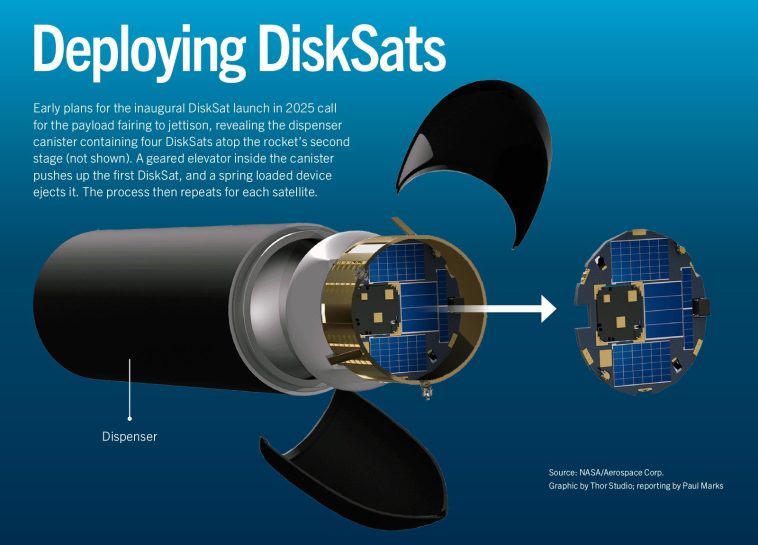
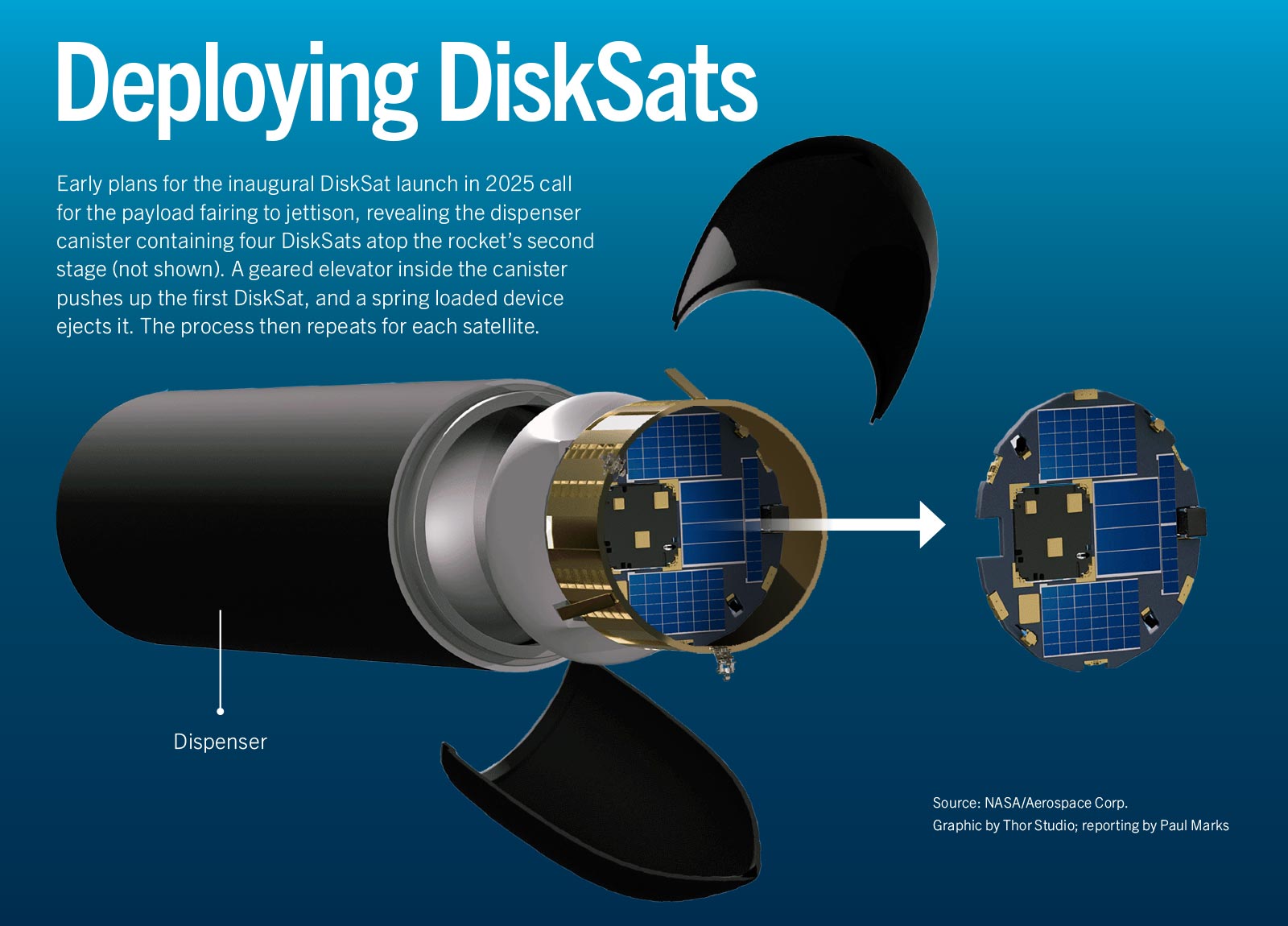
The DiskSat concept is not merely a cosmetic change but a profound rethinking of small satellite architecture aimed at accommodating bulky antennas, large scientific instruments, and high-power components—all of which have traditionally been challenging to fit within the confines of CubeSat dimensions. With this forthcoming demonstration mission, Aerospace Corp. aims to showcase the performance and maneuverability of these disk-shaped satellites, potentially simplifying the tricky parts of launching and operating more advanced payloads in orbit.
Redefining Satellite Architecture for High-Power Demands
DiskSats represent a marked departure from conventional small satellite designs. Instead of the standard CubeSat format, which is typically restricted in terms of payload capacity and power requirements, DiskSats offer designers more flexibility to build in larger antennas and instruments capable of high power. The ability to handle such substantial equipment is a central argument in favor of the DiskSat approach, which is increasingly critical as missions demand more from small satellite platforms.
The traditional CubeSat has been a workhorse for many research and commercial missions, but it has its limitations when it comes to meeting the needs of high-power applications. DiskSats can accommodate instruments that require prolonged exposure to the unfiltered elements of space and can support functionalities once considered only appropriate for much larger satellites. By reimagining satellite structure, Aerospace Corp. and other innovators are challenging the status quo and offering a viable alternative for missions that were, until recently, seen as off-limits to small satellite platforms.
Advantages for Large Antennas and High-Power Instruments
One of the most exciting aspects of DiskSat is its capacity to support large antennas. In today’s fast-evolving communications landscape, having a satellite platform capable of supporting high-gain antennas is critical for ensuring robust data links and real-time communications. Equally important is the ability to install sizeable scientific instruments that can conduct enhanced Earth observations or deep space surveys.
For researchers and commercial users alike, this means the possibility of deploying instruments that were previously the reserve of larger, more expensive satellites. The DiskSat’s design creates room for a broader spectrum of technologies, from advanced imaging systems to high-frequency communication arrays. This design not only meets current demand but also anticipates future technological advances that will require even more power and space.
- Enhanced Payload Capacity: DiskSats offer space for larger, more sophisticated instruments.
- Improved High-Power Management: The design facilitates installations of equipment that require significant power compared to their CubeSat counterparts.
- Greater Design Flexibility: The disk shape allows designers to re-think traditional layouts, accommodating both broad and deep scientific and commercial needs.
Unlocking Advanced Maneuverability in Orbit
Beyond the physical reconfiguration, another central selling point of the DiskSat is its enhanced maneuverability once in orbit. Maneuverability in space is a key factor for missions that require precise positioning, rapid orbit adjustments, or even collision avoidance in increasingly crowded orbital paths. With these capabilities, DiskSats promise a greater degree of control over their orbital paths, making them super important tools in both commercial and research arenas.
The ability to “find your way” through space in a controlled and agile manner is not only a technological feat but also a competitive advantage in today’s rapidly expanding market for space-based services. The maneuverability enhancements in DiskSats support operations that range from responsive communications to agile on-orbit servicing—scenarios where every kilogram of fuel and every bit of acceleration counts. At a time when space is full of problems and the twisted issues of orbital congestion are becoming more acute, a satellite that can efficiently dodge debris or reposition itself rapidly is a welcome innovation.
Fuel Efficiency and Orbit Adjustment Capabilities
DiskSats promise improvements in their fuel efficiency and accuracy in orbit adjustments. The capability to reorient or change orbits can lead to lower operational costs and extend the operational life of the satellite, bringing tangible benefits to commercial ventures that operate in space. This more agile design could also allow satellites to reposition for optimal data collection or even for coordinated constellations to serve as relays and data hubs, thereby enhancing overall mission effectiveness.
These advancements are essential because they allow mission planners to face the tangled issues of space operations head-on. Instead of worrying about the limited directional control that often hampers CubeSat missions, engineers and business strategists can bank on the DiskSat’s ability to handle quick maneuvers and adjust its orientation with precision. In today’s high-stakes satellite market, where timing and accuracy can make the difference between success and failure, this is a competitive edge.
Implications for Industrial Manufacturing and Emerging Space Economies
The introduction of DiskSats is not just a technical upgrade—it carries significant implications for the broader industrial and economic landscape. As disk-shaped small satellites become a viable option for launching more advanced payloads, this innovation is expected to influence small business ventures, large-scale aerospace contractors, and even governmental agencies that invest billions into space exploration and communications.
From an industrial manufacturing perspective, the shift to DiskSats could catalyze new production techniques and supply chain innovations. For companies that build satellites and related hardware, the disk shape may require retooling equipment, retraining staff, and even rethinking quality assurance processes to accommodate new design features. However, these initial challenges should be seen as stepping stones to a more adaptable and competitive future in satellite manufacturing.
Economic Opportunities for Small and Mid-Sized Enterprises
Small businesses and startups that are active in the aerospace sector could find unique opportunities arising from DiskSat technology. These enterprises can leverage the new design to offer specialized services such as high-resolution Earth imaging, precision communication services, or cutting-edge scientific research data. The new form factor is especially appealing because it addresses one of the most intimidating obstacles in satellite design: fitting advanced technology into a confined space without sacrificing performance.
Moreover, DiskSats could stimulate economic activity by creating a demand for novel components and subsystems that are not required for CubeSat production. This demand might spur partnerships between established industrial manufacturers and emerging tech companies, each bringing its own expertise to the table. The resultant collaboration could lead to faster development cycles, improved product reliability, and, ultimately, a broader spectrum of space-related services reaching the market more quickly.
- Increased Investment: With new design challenges come fresh investment opportunities in research and development.
- Supply Chain Innovations: The need for specialized components may lead to innovations in manufacturing techniques.
- Enhanced Collaboration: Established aerospace giants and small startups may join forces to capitalize on this emerging technology.
Overcoming Technical Challenges: Working Through the Tricky Parts
No new technology is introduced without its share of challenges, and DiskSats are no exception. The transition from CubeSat to a disk-shaped platform is riddled with its own set of tricky parts and tangled issues. These include ensuring structural integrity during the launch, managing heat dissipation from high-power instruments, and guaranteeing that the new design can withstand the rigors of the space environment.
Engineers must figure a path through these full-of-problems design challenges by rethinking materials, structural supports, and deployment mechanisms. For instance, while a disk-shaped satellite has more surface area for solar panels and cooling systems, it may also present challenges in maintaining balance and stability during rapid maneuvers. These are the kinds of hidden complexities that require creative engineering solutions—and solving them could set the stage for even more groundbreaking innovations in satellite technology.
Key Engineering Considerations
Several fine points deserve attention when considering the DiskSat design. Among these are:
- Structural Integrity: Ensuring that the disk remains sturdy during the intense vibrations and g-forces of launch.
- Heat Dissipation: Developing systems capable of releasing the excess heat generated by high-power equipment in the vacuum of space.
- Fuel Management: Integrating propulsion systems that enable effective and efficient changes in the satellite’s orbit.
- Deployment Mechanisms: Designing reliable unfolding or extension systems for large antennas and solar arrays once the satellite reaches orbit.
These points highlight that while the promise of DiskSats is massive, it is not without its intimidating hurdles. However, if engineers succeed in finding viable solutions, the benefits will extend far beyond a mere form factor adjustment.
Comparing CubeSat and DiskSat: A Comparative Analysis
Given that CubeSats have dominated the small satellite landscape for the better part of the last decade, it’s important to compare the traditional model with the emerging DiskSat structure. The table below outlines some of the core differences between these two satellite architectures.
| Feature | CubeSat | DiskSat |
|---|---|---|
| Form Factor | Standardized, cubic design | Disk-shaped, providing greater surface area |
| Payload Capacity | Limited to small, compact instruments | Able to host larger antennas and high-power instruments |
| Maneuverability | Moderate, with limited fuel efficiency | Enhanced agility for rapid maneuvering and orbit adjustments |
| Structural Challenges | Well-understood with many standardized designs | Requires innovative materials and balance management |
| Market Applications | Low-cost research, Earth observation, communication | Advanced scientific research, high-resolution communications, responsive tasking |
This comparative analysis makes it clear that while CubeSats continue to be a reliable option for many low to medium complexity missions, DiskSats are poised to step in for applications that demand more. The DiskSat design promises the flexibility to integrate advanced technology and serve a broader range of applications—elements that are becoming increasingly essential in today’s competitive space market.
Industry Implications: From Small Business to Large Aerospace Contractors
The introduction of DiskSats has ramifications that extend well beyond the confines of satellite technology. In the broader economic spectrum, the adaptive nature of the DiskSat could provide a significant boost to emerging space economies and even help small businesses compete with larger aerospace contractors. With its promising capabilities, the DiskSat form factor is likely to encourage investment in both research and manufacturing.
A shift toward this novel satellite design means that suppliers and manufacturers will need to re-examine their production lines, upgrade materials, and potentially train personnel to cope with the new format’s production requirements. Although the process of making this transition might seem overwhelming at first, the long-term benefits could include increased efficiency, reduced launch costs, and improved mission flexibility.
Opportunities for Collaborative Innovation
The evolution toward DiskSats invites collaboration across various sectors of the aerospace industry. Here are some key points to consider:
- Joint Ventures: Large aerospace firms can partner with small technology startups to combine expertise in advanced materials and system design.
- Research Collaborations: Universities and research institutions can work together with industry leaders to pilot novel systems and refine performance parameters.
- Government Partnerships: Agencies interested in domestic innovation and national security may support DiskSat programs with targeted grants and contracts.
This cross-sector collaboration could prove especially fruitful as the industry grapples with the tangled issues of rapidly evolving technology and the need for more agile designs in outer space. By pooling resources and expertise, stakeholders from large and small enterprises alike can help overcome the hidden complexities of new satellite designs and contribute to a more dynamic space economy.
Satellite Manufacturing in a Changing Economic Landscape
The move to DiskSat technology may also reshape the way satellite manufacturing is approached in the modern economy. Historically, manufacturing in the aerospace sector has been dominated by established players with deep pockets and extensive experience in standardized designs. However, the flexibility and expanded application potential of DiskSats could help level the playing field for smaller manufacturers and startups.
The benefits are multi-fold:
- Lower Entry Barriers: As DiskSats allow for a broader range of payload options and applications, manufacturers might find new market niches that were previously unavailable with CubeSats.
- Innovation in Materials: The demand for improved balance and structural integrity could spur innovations in lightweight and durable materials.
- Enhanced Customization: Smaller firms may be able to offer highly customized solutions tailored to specific mission profiles without being tied down by one-size-fits-all designs.
These economic benefits are not just theoretical. They signal a transformative moment in which the aerospace industry might witness increased competition, more rapid technological development, and ultimately a richer ecosystem of providers and consumers. This evolution is critical at a time when every move in the market can have far-reaching implications for space exploration, national security, and global communications.
Preparing for 2025 and Beyond: An Evolving Space Agenda
As the launch window for the first DiskSat demonstration mission in 2025 draws near, industry insiders and stakeholders alike are watching closely. This anticipated mission is more than just a test flight—it is a litmus test for a new approach to satellite design. The outcomes of this mission could well pave the way for a generation of satellites that are not only more capable but also more adaptable to the ever-changing demands of space applications.
Looking ahead, several key themes will shape the discussion:
- Technology Adoption: How quickly will the aerospace ecosystem embrace DiskSat technology?
- Market Evolution: In what ways will the competitive dynamics change as disk-shaped satellites prove their worth?
- Policy and Regulation: Will government policy and international regulatory frameworks evolve in response to new satellite technologies?
Organizations and policymakers will need to work together to steer through the emerging market trends. The integration of more agile, high-performing satellite designs into critical sectors such as telecommunications, Earth observation, and defense will require updated guidelines, innovative funding mechanisms, and a collective willingness to experiment with new concepts.
Anticipated Regulatory Adaptations
While the technology itself holds tremendous promise, its success will also hinge on an adaptable regulatory landscape. In the coming years, space policymakers may need to reconsider some of the established rules to better accommodate innovative designs like DiskSats. This evolution is critical because regulatory frameworks have traditionally been built around legacy systems, and the arrival of new technology often presents a nerve-racking challenge to existing norms.
Regulators might explore the following areas:
- Launch Licensing: Modifications in the licensing process to support more varied satellite designs.
- Orbital Debris Management: New strategies to ensure safe deployment and reentry, accounting for the unique features of disk-shaped satellites.
- International Cooperation: Collaborative frameworks to manage frequency allocation and avoid interference across borders.
These policy adaptations will be just as critical as the technical improvements in ensuring that DiskSats can transition from promising prototypes to integral components of space missions worldwide.
The Broader Business Perspective: Reimagining Commercial Space Ventures
From a business perspective, the emergence of DiskSats could have significant strategic implications. In an era where even small innovations can trigger substantial market shifts, this new satellite design might well redefine commercial space ventures. Companies that are quick to adapt may open up new revenue streams, while those that stick solely to conventional designs might find themselves on the back foot.
Commercial enterprises, including those involved in telecommunications, Earth observation, and even space tourism, could leverage the DiskSat’s capabilities to offer services that were previously deemed too ambitious or expensive. The promise of enhanced maneuverability and increased payload capacity could allow service providers to deliver higher performance at a lower overall cost. Such competitive advantages are indispensable in today’s market, where even slight differences in service quality can be the key to market leadership.
Key Business Strategies for a DiskSat-Enabled Future
Here are some strategies that businesses might adopt as they work their way through this emerging landscape:
- Invest in R&D: Focus on developing complementary technologies that maximize the potential of DiskSat platforms.
- Form Strategic Alliances: Collaborate with technology innovators and manufacturing experts to create a robust supply chain for new satellite components.
- Adapt Business Models: Reassess traditional revenue models and consider value-based pricing that leverages the superior capabilities of DiskSats.
- Monitor Regulatory Developments: Stay informed of policy changes that might affect launch procedures, spectrum allocation, and other critical operational aspects.
Such business strategies not only help in mitigating risks associated with working through uncharted technological territory but also position companies to take advantage of a market poised for significant growth. Being proactive in this environment means more efficient resource allocation, faster time-to-market for new services, and a stronger overall presence in the competitive aerospace market.
Looking Beyond 2025: The Future of Small Satellite Innovation
While the 2025 DiskSat demonstration is generating buzz and excitement today, its long-term implications could extend far beyond a single mission. DiskSats might be the blueprint for the next generation of small satellites, a design evolution that creates new possibilities for scientific, defense, and commercial applications. As technology continues to advance at a breakneck pace, keeping an eye on these developments is essential.
The potential ripple effects include:
- Enhanced Global Connectivity: With larger antennas and improved signal processing, DiskSats may bolster next-generation telecom networks by providing more reliable and high-bandwidth connectivity.
- Expanded Scientific Research: The newfound capacity to carry complex instruments could lead to deeper space research missions and more detailed Earth monitoring, opening fresh avenues in climate science and astronomy.
- Improved National Security: For defense applications, the ability to reposition satellites quickly can be a key asset in surveillance and secure communications.
In many ways, DiskSats are becoming a symbol of the larger transformation occurring in the aerospace industry. They illustrate how thinking outside the traditional design box and addressing the fine points of engineering—such as balance, heat management, and system integration—can lead to more capable and versatile platforms. As we take a closer look at these developments, it is apparent that the DiskSat is set to be a cornerstone for future satellites that must contend with the slight differences in market demand and technological possibility.
Adapting to Future Market Trends
The evolution of small satellite technology is a dynamic process. Over the coming years, we can expect a series of iterative improvements and radical redesigns aimed at exploiting every possible advantage in space. The DiskSat is just one step in this ongoing journey, a stepping stone that could lead to even more advanced platforms capable of transforming multiple industries simultaneously.
Market analysts predict that the increased flexibility offered by DiskSat designs will spur innovation in sectors ranging from commercial communications to targeted scientific missions. As businesses and governments alike begin to embrace the new format, the potential for transformative change grows ever larger. That said, adapting to these shifts will require industry leaders to work through the confusing bits of technology transition quickly and with confidence.
Conclusion: Charting a Course Through the Twists and Turns of Satellite Innovation
The upcoming DiskSat demonstration mission in 2025 represents more than just a technological novelty—it is a harbinger of change for the aerospace industry. With the potential to support larger payloads, improved maneuverability, and enhanced market applications, DiskSats are quickly establishing themselves as a credible alternative to legacy CubeSat designs.
The journey to commercial viability is not without its intimidating hurdles. Engineers must tackle the tricky parts of ensuring structural integrity, managing heat dissipation, and perfecting fuel efficiency, while companies and regulators work together to steer through a rapidly evolving policy landscape. Yet, if all stakeholders successfully figure a path through these challenges, the rewards will be substantial.
From an industrial standpoint, DiskSats could energize the supply chain, spur innovative collaborations between well-established aerospace giants and nimble startups, and open doors to countless new applications in communication, Earth observation, and scientific research. For the business community, this means new opportunities for investment and market expansion, as well as a chance to redefine the parameters of what is possible in the realm of small satellites.
As we dive in to watch the trials of the first DiskSats in 2025, it becomes clear that we are witnessing the birth of a new era in space innovation. The disk-shaped satellite offers a flexible, powerful platform that addresses many of the hidden details that have long inhibited the full potential of small satellite technology. In doing so, it not only challenges traditional models but also sets the stage for a future in which space is even more accessible, versatile, and economically vibrant.
The long-term outlook promises that as DiskSats mature through further testing and refinement, they may very well become a cornerstone for a host of new space services and industries. In this rapidly evolving arena, business leaders, engineers, regulators, and researchers must all work in concert to take full advantage of the opportunities presented by DiskSat technology.
By embracing innovation while patiently working through the twists and turns of technological development, the aerospace industry can continue to push the boundaries of what is achievable. DiskSats are a testament to the power of rethinking established designs and an invitation for us all to reimagine the future of space exploration and commercial operations.
In conclusion, the DiskSat’s arrival in 2025 is more than just a demonstration—it is a pivotal moment that encapsulates the spirit of progress in an industry that is constantly reinventing itself. As stakeholders across the spectrum prepare for this exciting new chapter, the promise of DiskSat technology stands as a powerful reminder that innovation often emerges by reexamining traditional ideas, solving tricky parts, and taking a closer look at even the smallest of details.
Originally Post From https://spacenews.com/first-disksats-to-take-flight-in-2025/
Read more about this topic at
DiskSat
DISKSat – Gunter’s Space Page