Revolutionizing Tube Manufacturing: A New Era for Small and Medium Enterprises
The landscape of tube and pipe fabrication is evolving rapidly. Small businesses and mid-sized manufacturers are increasingly looking to upgrade their production capabilities with state-of-the-art machinery that not only boosts output but also significantly improves quality. The recent introduction of a Flexible Cold Forming (FCF) mill by SEUTHE, recently acquired by Major Metals Company in Mansfield, Ohio, stands as a powerful testament to this industrial shift.
This editorial aims to take a closer look at the benefits and opportunities provided by such advanced machines in tube manufacturing. In doing so, we explore how innovations like the high-speed MonoCut saw and the direct inner diameter shaping technology can help companies overcome the tricky parts, tangled issues, and the confusing bits of traditional tube milling.
Embracing Automation with Advanced Tube Manufacturing Machines
The acquisition of the FCF mill by Major Metals Company serves as a perfect example of how automation is transforming the old-school manufacturing process. Instead of merely investing in machinery to increase capacity, companies are making leaps of faith—taking on new technology that promises not just an incremental boost but a fundamental change in how production is carried out.
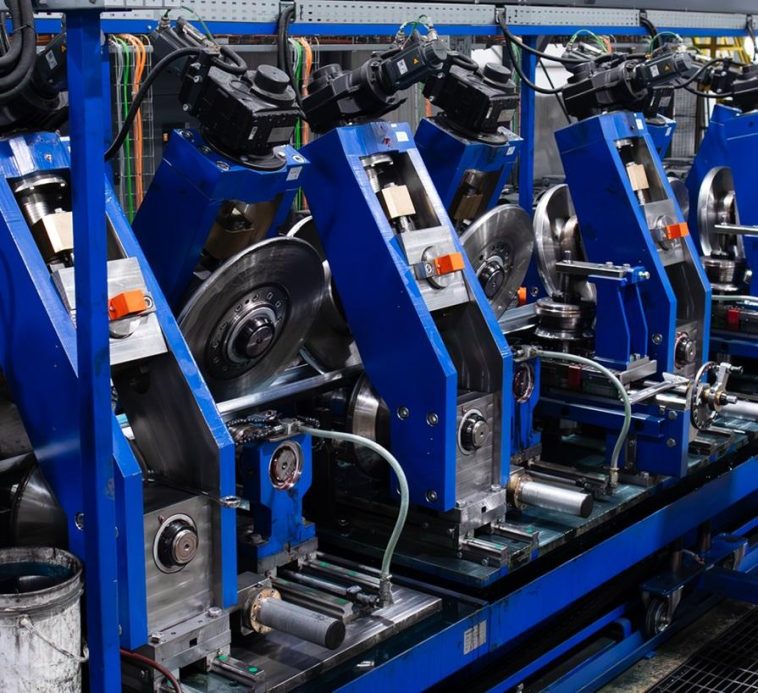
Family-owned and operated, Major Metals has invested heavily in five different tube mills running on a multitude of materials including hot-rolled, cold-rolled, galvanized, and aluminized steels. However, the new FCF mill has allowed the company to take a giant leap into a world where customization and production flexibility are key. By forming square and rectangular tubing directly from the inner diameter (ID) rather than the traditional outer diameter (OD) approach, the machine helps avoid many of the fine points that have historically led to production inefficiencies.
Advanced Customization Capabilities for Niche Markets
One of the most exciting aspects of the FCF mill is its ability to create virtually any metric or imperial size tube up to 5 inches square, all while operating at speeds of up to 330 feet per minute. This remarkable flexibility means that even if the tubing requirements are off the beaten path—custom sizes, non-standard wall thicknesses, or unique load-bearing specifications—the machine is more than capable of meeting those demands.
For example, custom orders that previously might have necessitated multiple tooling sets and lengthy changeover times can now be addressed much more quickly. The universal tooling system, which only requires minimal shimming adjustments, represents a significant step in managing your way through the “tangled issues” that come with conventional changeovers. When a family-owned company like Major Metals can switch between product runs in as little as 40 minutes, this isn’t just an improvement in efficiency—it’s a complete rethinking of the manufacturing process.
Innovative Production Techniques: Direct ID Forming vs. Traditional Methods
Traditional tube-forming methods often involve shaping tubing from a round “mother” tube derived from the OD. This approach sometimes introduces slight material compression in the corners, resulting in wasted raw material and potential issues with product quality. With the FCF mill using a direct inner diameter forming technique, Major Metals has been able to bypass these problematic steps entirely.
The end result is tubing with fewer twists and turns in the process that can convert into more uniform, twist-free products. Not only does this enhance the aesthetic appeal of the final product, but it also saves between 2.5% to 8% on the width of the strip used, a cost-saving measure that can be significant over large production runs.
Maximizing Efficiency with High-Speed Cutting Technology
In the realm of tube fabrication, every second counts. The faster you can move a product through the manufacturing chain without compromising quality, the better your competitive edge in a market loaded with pressures and high customer expectations. The MonoCut saw integrated into the FCF mill represents a major leap forward by reducing the time needed for tube cutoffs while also drastically improving cut quality.
Accelerated Production Through Linear Motor Technology
A standout feature on the FCF mill is the high-speed MonoCut saw. Unlike traditional mechanical cutoff systems that rely on belts or rack-and-pinion mechanisms, this saw is driven by a linear electric motor. This advanced technology allows the saw carriage to accelerate up to line speed in a fraction of the time, significantly reducing the turnaround on short tube lengths.
As Major Metals President Sam Mason points out, the rapid acceleration means even short, 10- or 12-foot pieces can be cut at speeds comparable to much longer lengths. This results in a more controlled and smooth cutoff operation—one where the cutoff process is not jerky or unpredictable. For manufacturers, the benefits are clear: more consistent cuts, reduced burr formation, and ultimately, an increase in overall productivity.
Enhanced Productivity: The Impact on Daily Throughput
The practical benefits of this improved efficiency are most evident when considering overall production capacity. Currently, Major Metals is using the FCF mill to produce tubing with a volume of up to 15.5 lbs per foot and up to 0.25-inch wall thickness. Yet, the machine is capable of churning out as much as 60,000 tons annually under optimal conditions—potentially doubling the company’s current output.
Small and medium enterprises, especially those that rely on one-shift daily outputs, stand to significantly benefit from this type of high-speed processing. With an anticipated daily output target of 160 tons, companies can meet rising customer expectations without the need to invest repeatedly in additional machinery. The implications of this are huge in a market where every minute on the production line translates directly to cost savings and increased throughput.
Cost Saving Opportunities and Operational Benefits
Capital investments in new machinery are always weighed against the potential savings and productivity gains. For business owners, the question is not just whether the purchase is viable but how it will change the entire cost structure of production. The FCF mill’s design, particularly the use of universal tooling and the efficient changeover capabilities, offers multiple avenues for cost savings.
Minimizing Tooling Expenses Through Universal Tooling Systems
Traditional mills require separate tooling sets for different tube sizes. For a company needing to produce a variety of tubes, this can be an expensive and time-consuming exercise. With conventional tooling sets costing roughly $100,000 to $125,000 each, a manufacturing facility may end up spending upwards of $1.5 million if ten different tube sizes are needed. The FCF mill eliminates much of this expenditure by using a universal tooling set that is easily modified to produce a variety of sizes.
This not only slashes the potential capital outlay but also greatly reduces the downtime associated with changing over between runs. The freedom to quickly adapt to new tube dimensions is a competitive advantage that merely cannot be matched by older production lines with rigid changeover protocols.
Raw Material Savings Through Direct Forming
Another significant advantage of the FCF mill is the way in which it handles raw materials. With traditional tube-forming methods, the corners of square tubes that are made from round mother tubes can lead to compressed material, essentially wasting a fraction of the input strip. With direct forming from the ID, this inefficiency is minimized, resulting in raw material savings of about 2.9% in some cases.
While this might seem like a small percentage on paper, for manufacturers operating large-scale production runs, the cumulative effect is highly beneficial. Not only does it lower the cost per unit, but the additional savings can be reinvested into further innovation or passed on to customers in the form of lower prices.
Tooling Longevity: Reduced Vibration and Extended Blade Life
The longevity of tooling components is another area where the FCF mill shines. Traditional cutoff systems often subject their saw blades to nerve-racking vibrations that can lead to premature wear and the need for frequent replacements. In contrast, the new MonoCut saw is designed with two key features that help extend blade life:
- A form-fit clamping system that secures the tubing immediately ahead of the saw, reducing unwanted movement.
- An innovative gearbox design that minimizes backlash during high-speed return motions, even at speeds up to 1,200 feet per minute.
According to ASMAG, these enhancements have already resulted in a doubling of saw blade service life when compared to conventional systems. For manufacturers, this means fewer interruptions for maintenance and lower operating costs over the long term.
Maintaining Laser-Grade Quality in High-Volume Production
Quality is key in tube manufacturing, especially as more end-users demand products that meet higher precision requirements. This demand has spurred manufacturers to invest in technologies that deliver a smoother, cleaner cut, thereby minimizing the occurrence of defects such as burrs, dimples, and unexpected deformations.
Precision Cutting: Small Distinctions That Make a Big Difference
When it comes to tube fabrication, even the slight differences in cut quality can have significant downstream impacts. The high-speed MonoCut saw on the FCF mill provides exceptionally clean cuts that are nearly free of burrs. This is largely accomplished by reducing the amount of vibration during the cutting process and ensuring a consistent, controlled operation.
Sam Mason, President of Major Metals, points out that compared to traditional cutoff methods, the new machine leaves the tube ends markedly cleaner. With laser-like precision, even short runs of tube are now being produced with tolerances as tight as 0.020 inches over a 20-foot length. This is crucial for customers who are moving towards higher-precision manufacturing processes—they can now rely on their metal suppliers to meet these stringent requirements consistently.
Advanced Material Handling Techniques in Tube Production
Beyond mere cutting, the FCF mill’s design also emphasizes efficient material handling. The guides and drive mechanism are mounted in a way that shields them from flying chips and other contaminants that might cause erratic performance. This means that maintenance downtime is significantly reduced, allowing manufacturers to run longer production cycles without compromising on quality.
For operators already juggling multiple shifts and high production demands, the added benefit of fewer stoppages means a direct boost in overall operational efficiency. Manufacturers can now steer through even tight production schedules while keeping their quality standards rock-solid.
Opportunities for Small Business Growth and Market Expansion
For small and medium enterprises, the decision to invest in an advanced tube mill isn’t just about improving manufacturing quality—it’s also about fostering business growth. Access to such groundbreaking technology broadens the range of markets a company can cater to, especially when it comes to filling a niche for custom tube sizes and specifications.
Expanding Product Lines with Responsive Prototyping
One of the most compelling arguments for adopting the FCF mill is its ability to quickly prototype custom tube designs. When a customer presents a unique request—perhaps for an unconventional size or shape—the ability to crank out a sample within hours rather than days is a game-changer. As Major Metals has demonstrated, a new lineup of custom profiles can be developed using machine-programmed recipes that adapt seamlessly to specific requirements.
This flexibility opens up opportunities to explore new market segments, such as hollow structural sections (HSS) and other applications that were previously off-limits due to production constraints. It allows manufacturers to test the waters in potentially lucrative niches without having to commit significant upfront capital to specialized tooling.
Catering to the Mid-Tier Market with Customized Solutions
The mid-tier market—comprising companies that require moderate volumes of improved, custom tubes—stands to gain enormously from technologies like the FCF mill. These companies often find themselves caught between the high-volume, standard-size offerings of large competitors and the need for more specialized products. With an adaptable machine that can produce a vast array of tube designs quickly and efficiently, mid-tier manufacturers can capitalize on market gaps that would otherwise remain untapped.
According to the leadership at Major Metals, the machine’s flexibility allows them to secure orders that may have otherwise been lost to larger competitors. By offering tailor-made solutions, they are not only tackling the traditional challenges of production but are also tapping into new revenue streams that directly respond to customer-specific demands.
Facing the Future: Strategic Considerations for Modern Manufacturers
While the benefits of cutting-edge tube forming technology are clear, it is important for business leaders to consider the entire picture before making such a transformative investment. The decision to adopt new technology involves not just the purchase price of the machine but also considerations around operator training, process integration, and long-term maintenance.
Training and Operator Adaptation: Figuring a Path Forward
One of the trickier parts of integrating any new machinery into an existing production line is ensuring that operators are fully trained and comfortable with the technology. The FCF mill, with its advanced automation and high-speed operations, demands that operators learn to manage new control systems and adjust their workflows accordingly. However, reports from early adopters like Major Metals suggest that the learning curve is manageable, with changeover times reducing as teams become more adept.
The reduction from a typical four to five-hour changeover on conventional mills to around 40 minutes on the FCF mill is one such indicator of success. Still, companies need to invest in quality training programs and continuous improvement strategies to get the best out of such advanced systems.
Integrating New Technology with Existing Production Lines
For many manufacturers, especially those with legacy equipment, the integration of a new machine into the production workflow can appear overwhelming. The challenge lies in aligning the new, high-speed processes with older systems that may not be as agile. To overcome this, companies should map out their production processes thoroughly, identifying the potential for bottlenecks and disruptions.
Some bullet points to consider when integrating new production technology include:
- Conducting a full audit of the existing production line to identify integration points.
- Implementing parallel runs to gain operational confidence with the new system.
- Scheduling regular reviews to pinpoint areas that need adjustment or reconfiguration.
- Ensuring that cross-functional teams are involved in the transition for a holistic approach.
By laying out these steps clearly, manufacturers can not only steer through the nerve-racking transition phase but also capitalize on the enhanced capabilities the new machine brings.
Market Implications: How Advanced Tube Mills Affect the Broader Industry
The ripple effects of integrating technologies such as the FCF mill extend far beyond the confines of individual factories. As more companies adopt these innovations, industry standards begin to shift, and higher-quality, customized products become the norm. This trend can lead to a more competitive market environment where efficiency and flexibility are the hallmarks of success.
Competitive Edge for Small and Medium Businesses
In an industry routinely loaded with tough competition from large-scale mills, small and medium enterprises need every advantage they can muster. Advanced tube manufacturing technologies level the playing field by giving smaller operators access to capabilities previously only available to bigger players. By being able to produce high-quality, custom tube profiles quickly, these companies can better serve niche markets that demand personalization and speed.
For many, the adoption of the FCF mill is not just an investment in machinery, but rather an investment in business longevity. As market demands evolve, the ability to quickly adapt and produce a diverse array of products is a surefire way to secure a competitive edge. This flexibility is especially critical in a market where customer expectations are climbing, and the fine shades of quality are more important than ever.
Future Trends in Tube and Pipe Fabrication
The success of new machinery like the FCF mill signals a broader trend in the metal fabrication world. With the push towards automation and digital integration, we are witnessing what may well be a dramatic overhaul in how tubes are produced. Looking ahead, manufacturers may find that investments in advanced production technology not only save money and time but could also revolutionize the industry.
Future trends may include:
- Further advancements in automation that reduce manual intervention even more.
- Integration with real-time data analytics to optimize every stage of production.
- The development of even more versatile machines that can handle a wider range of materials and products.
- Greater emphasis on sustainability and material efficiency during the production process.
With technological progress moving at a rapid clip, companies that act now to incorporate these improvements may find themselves not only surviving but thriving in an increasingly competitive market.
Conclusion: The Way Forward in a World of Rapid Production Advancements
In conclusion, the arrival of advanced tube manufacturing technology like the Flexible Cold Forming mill from SEUTHE presents both exciting opportunities and challenges for manufacturers. For companies like Major Metals, the benefits are already visible—ranging from improved production speeds and precision cutting to significant savings on tooling and raw materials. These gains are essential in a market that is constantly evolving and loaded with intricate twists and turns that make production as much an art as it is a science.
The key takeaway for small and medium enterprises is that embracing such technologies is not a nerve-racking step into the unknown. Instead, it represents a proactive move to address the subtle parts of modern production: the minor details that collectively make a massive difference in cost, efficiency, and quality.
By investing in a machine that offers rapid changeovers, reduced material wastage, and the flexibility to handle custom orders on short notice, companies can position themselves to better manage the challenging pieces of today’s competitive market. Moreover, the integration of high-speed cutting technology ensures that product quality remains at the core of operations—a factor that will continue to be super important as customer specifications grow more demanding.
Businesses, especially those with a legacy of dealing with intimidating production complexities, now have the chance to revitalize their operations in ways that were previously considered out of reach. With advanced tube manufacturing technology, the future of production is not only about volume but also about agility, flexibility, and the ability to quickly figure a path through the challenges that lie ahead.
As we look to the future, it becomes clear that automation and innovation will drive the metal fabrication industry into new territories. Companies that take advantage of these advancements are likely to find themselves at the forefront of market evolution, ready to meet the ever-changing demands with efficiency and precision. Whether it’s through cost savings, improved quality, or faster turnaround times, the transformation brought about by machines like the FCF mill is reverberating throughout the industry.
For small business owners and mid-sized manufacturers, the decision is simple: those who choose to invest in modern, flexible production technologies today will be the ones best positioned to thrive in the competitive landscape of tomorrow.
In this era of rapid technological change, it’s important to not only get into the new methods of production but also to continuously build on them. As the old industry norms give way to innovative approaches, manufacturers must stay ahead by adopting cutting-edge tools and embracing the continuous improvements that these advancements bring. The choice to leap forward, as Major Metals has done, is proof that sometimes the greatest rewards come from the willingness to step into a more dynamic, flexible way of doing business.
By taking advantage of capabilities such as the high-speed MonoCut, direct ID forming, and advanced universal tooling, the tube fabrication process is undergoing a transformation that many believe will signal a new industrial era. This is a world where efficiency, quality, and customization go hand in hand, creating a synergy that drives the entire industry forward.
Ultimately, the future of tube and pipe fabrication lies in smart investments that allow for both increased capacity and operational agility. It’s not just about doubling production tonnage—it’s about elevating the entire production model to meet the high expectations of modern industrial and consumer markets. And in doing so, companies not only safeguard their future but also pave the way for even greater levels of innovation and success in the years to come.
Originally Post From https://www.thefabricator.com/tubepipejournal/article/tubepipefabrication/rapid-cut-saw-flexible-tooling-make-mill-a-hit
Read more about this topic at
Tube Fabricating Services | Tube Fabricating Companies
Flexible Rubber Tubing Manufacturing Companies